

Vocal Chain Order: Where Cleanup, Tuning, and Effects Go
Choose a vocal chain order by purpose: editing, optional transformation, tuning, EQ, compression, de-essing, and effects. Learn when to change the order.
By Vocalist.ai Editorial Team · September 28, 2026 · 5 min read

A useful starting vocal chain is editing and level preparation → optional voice transformation → pitch correction as needed → EQ → compression → de-essing → mix effects. It is a starting point, not a rule. Put each processor where it can solve the problem without making the next stage harder to control.
Keep two decisions separate: preparing a file for a tool, and mixing the finished performance. Vocalist offers vocal transformation, Tune, and stem splitting; the full EQ, compression, automation, and effects chain described here belongs in your DAW.
A starting order and its purpose
| Stage | Main question |
|---|---|
| Comping and editing | Is this the performance you want to keep? |
| Clip gain or volume preparation | Are a few words much louder than the rest? |
| Cleanup, when necessary | Is noise, bleed, or printed ambience obstructing the vocal? |
| Optional transformation | Do you want another vocal character? |
| Pitch correction, when necessary | Which notes actually need correction? |
| EQ | What tonal balance works against the instruments? |
| Compression | Which dynamic changes need controlling? |
| De-essing | Are sibilants distracting after the other processing? |
| Automation and effects | How should the vocal move through the arrangement? |
Use the table to identify the stage you need before adding another processor.
Start with edits, not a plugin preset
Choose takes, repair obvious timing errors, and add short fades where edits click. Use clip gain to reduce an unusually loud word or lift a quiet phrase before a compressor responds to the whole performance.
This is not an instruction to flatten every syllable. Preserve the dynamics and timing that communicate the lyric. If a consonant is missing or the recording clips, a longer chain may not solve it.
Our vocal comping guide covers combining takes before you start mixing.
Keep transformation input separate from mix effects
When transforming a voice, export one dry performer without the beat, doubles, or effect returns. If the source is already clean, there is no reason to run stem separation first.
If you only have a wet or mixed vocal, isolate and reduce embedded reverb as needed, then evaluate the result. Cleanup can leave artifacts; it does not guarantee recovery of an untreated take.
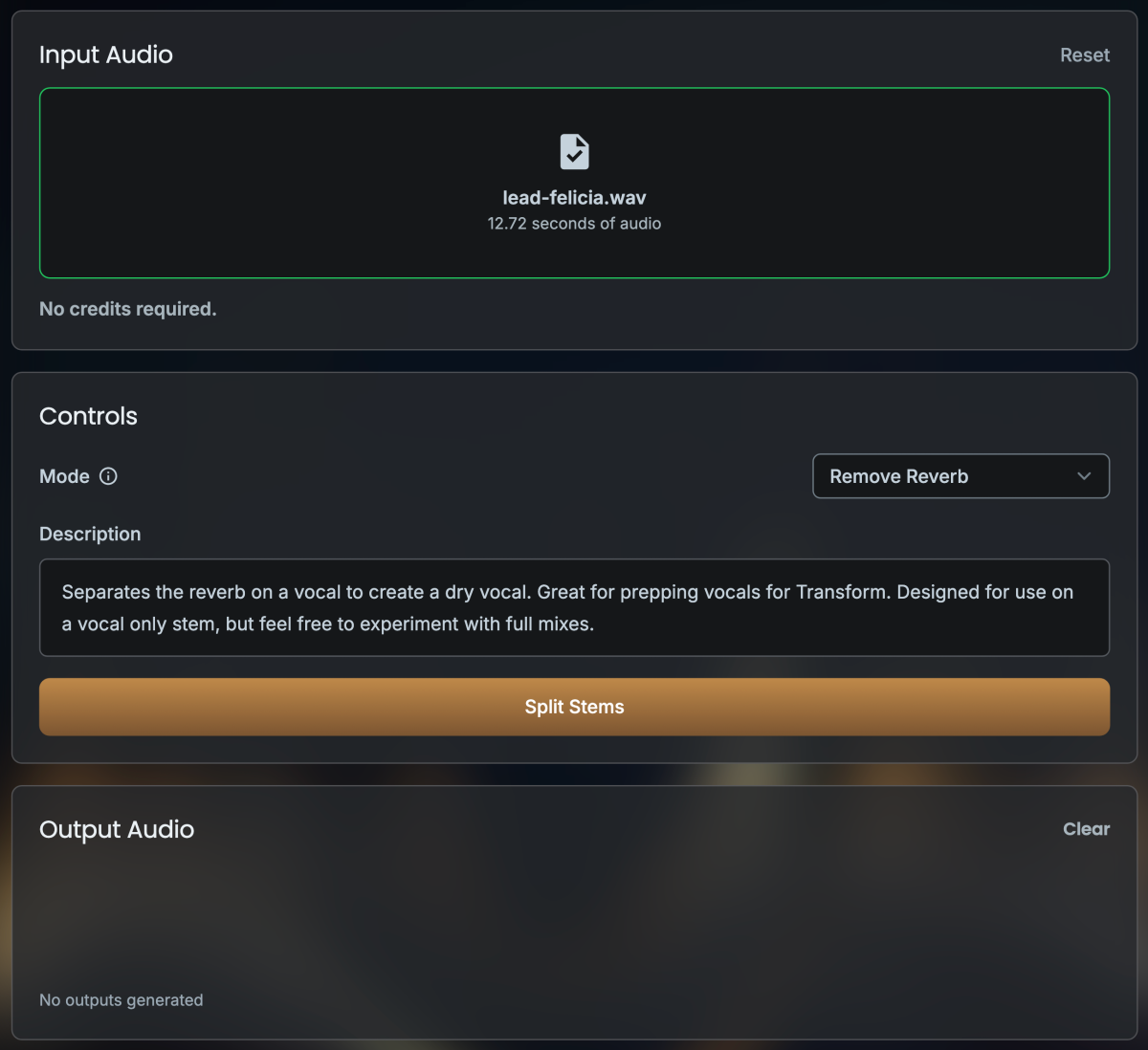
The first-transformation documentation recommends a dry solo export. It allows pitch correction before or after transformation and suggests applying it afterward as a starting approach. Neither Tune nor Split is a compulsory stage.
Should tuning come before or after transformation?
If the source's pitching makes the intended melody difficult to follow, compare a gently corrected input with the untreated version. If the source is already convincing, try transformation without pre-tuning and assess the output.
Avoid correcting the same note aggressively in several stages. You can remove a wanted slide or vibrato while trying to make the vocal more stable. Keep the original as a reference and verify the correct key when using scale-based correction.
The pitch-correction guide focuses on tuning choices rather than chain order.
EQ before compression, or compression before EQ?
Both can be useful because they make the compressor respond to different material.
EQ before compression: reducing an unwanted low-frequency bump first can stop it dominating the compressor's response. A large presence boost before compression can also make those frequencies drive the detector harder.
Compression before EQ: the compressor reacts to the original tonal balance, and the following EQ changes the sound without changing that first compression decision. A later boost can still exaggerate sibilance or noise.
You can split the jobs: corrective EQ before the compressor and a small tonal adjustment afterward. Do not add two EQs simply because a diagram contains them. Use only the stages with a clear purpose.
Place de-essing where the harshness appears
A de-esser reduces excessive sibilant energy. If strong s sounds make a compressor respond badly, control them earlier. If compression or a later EQ boost makes them more prominent, de-ess afterward. Listen to complete words so the fix does not turn clear speech into a lisp.
Compression and de-essing interact with level, so compare bypassed and processed versions at similar loudness.
Reverb and delay usually need their own balance
For a conventional lead, effects sends let you balance the dry voice independently from reverb and delay. You can also automate a throw on one word without filling every gap with effects.
An insert effect is valid when you deliberately want the entire signal changed. Distortion into reverb and reverb into distortion will not behave identically. Treat unusual orders as creative choices you can evaluate, not mistakes by definition.
The Sound On Sound vocal-production guide provides further context on combining vocal treatments.
Build the smallest chain that solves the problem
Bypass each stage in the full mix. If the lyric becomes no less clear and the performance no less effective, that processor may not be earning its place. Save the dry source and distinguish preparation renders from the final mix.